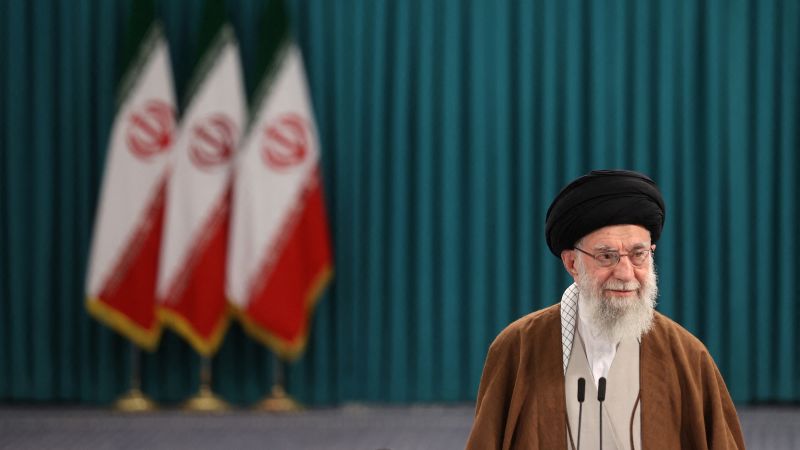
The recent targeted strikes by the United States and Israel have resulted in the deaths of several high-ranking Iranian officials, including Supreme Leader Ayatollah Ali Khamenei. This action has ignited a wave of celebration in Tehran, but it has also deepened the uncertainty surrounding the future of Iran’s governance. The vacuum left by Khamenei’s removal poses a complex challenge, as the regime grapples with both internal strife and external pressures.
Khamenei’s tenure was characterized by significant mismanagement and a notorious reputation for repression. His death has led to a mix of jubilation and mourning among the Iranian populace, as the nation officially observes 40 days of mourning while pro-regime crowds celebrate. The stakes are high for the remnants of the regime, which must now navigate the aftermath of this sudden power shift.
Israeli officials have suggested that the timing of the strikes was strategic, taking advantage of a moment when senior Iranian leaders were gathered. Concurrently, US President Donald Trump appears to be drawing parallels with his approach to Venezuela, hinting at a successor to Khamenei but withholding specific names. His reluctance to disclose potential leadership candidates raises questions about the administration’s strategy in the region.
As Iran contemplates a succession plan, it faces unique challenges. Unlike Venezuela, where a clear alternative emerged, Iran’s political landscape is intricately tied to a theocratic regime that has consolidated power for nearly five decades. A substantial portion of the nation’s over 90 million citizens depend on the current regime for their livelihoods, complicating any potential transition.
The recent strikes also resulted in the deaths of Aziz Nasirzadeh, the Iranian defense minister; Ali Shamkhani, head of the Iranian Security Council; and Mohammad Pakpour, commander of the Islamic Revolutionary Guard Corps (IRGC). This decimation of Iran’s security elite comes at a time when the regime had been recently reconstituted after a prior conflict. The question now is who will step in to fill this power vacuum.
Historically, air campaigns aimed at regime change have often led to unintended consequences. While the US and Israel may believe that removing the upper echelons of Iran’s leadership will facilitate a more favorable outcome, the reality may be more complex. Hardliners within the regime are likely to rush in to fill the void, driven by a desire to survive amid the chaos.
The potential for a consensus among factions within Iran may hinge on the notion of making peace with the US and moderating their stance temporarily. However, any perceived weakness could trigger backlash in a society already wary of losing its revolutionary identity. The absence of a viable opposition further complicates this dynamic, as figures like Reza Pahlavi, the heir to the former Shah, face significant risks should they attempt to return to power.
The missteps of Khamenei have inadvertently made it easier for the US and Israel to justify their actions. His oppressive measures and economic mismanagement have left Iran in dire need of change, with the populace increasingly desiring greater freedoms and economic stability. Yet, the regime’s response to the strikes has been aggressive, with retaliatory actions against neighboring countries exacerbating regional tensions.
The most pressing concern now is the potential for fragmentation within Iran. If no single faction emerges victorious, the result could be widespread violence and civil strife, destabilizing not just Iran but the broader region. Trump’s administration, lacking both the political capital for prolonged military engagement and a coherent long-term strategy, may inadvertently heighten these risks.
While the technological and military capabilities of the US and Israel have enabled swift strikes, they do not address the underlying complexities of Iranian society and governance. The enduring challenges that Iran presents to the US remain, despite the recent military successes. The situation continues to evolve, raising critical questions about the future trajectory of Iran and its relationship with the international community.