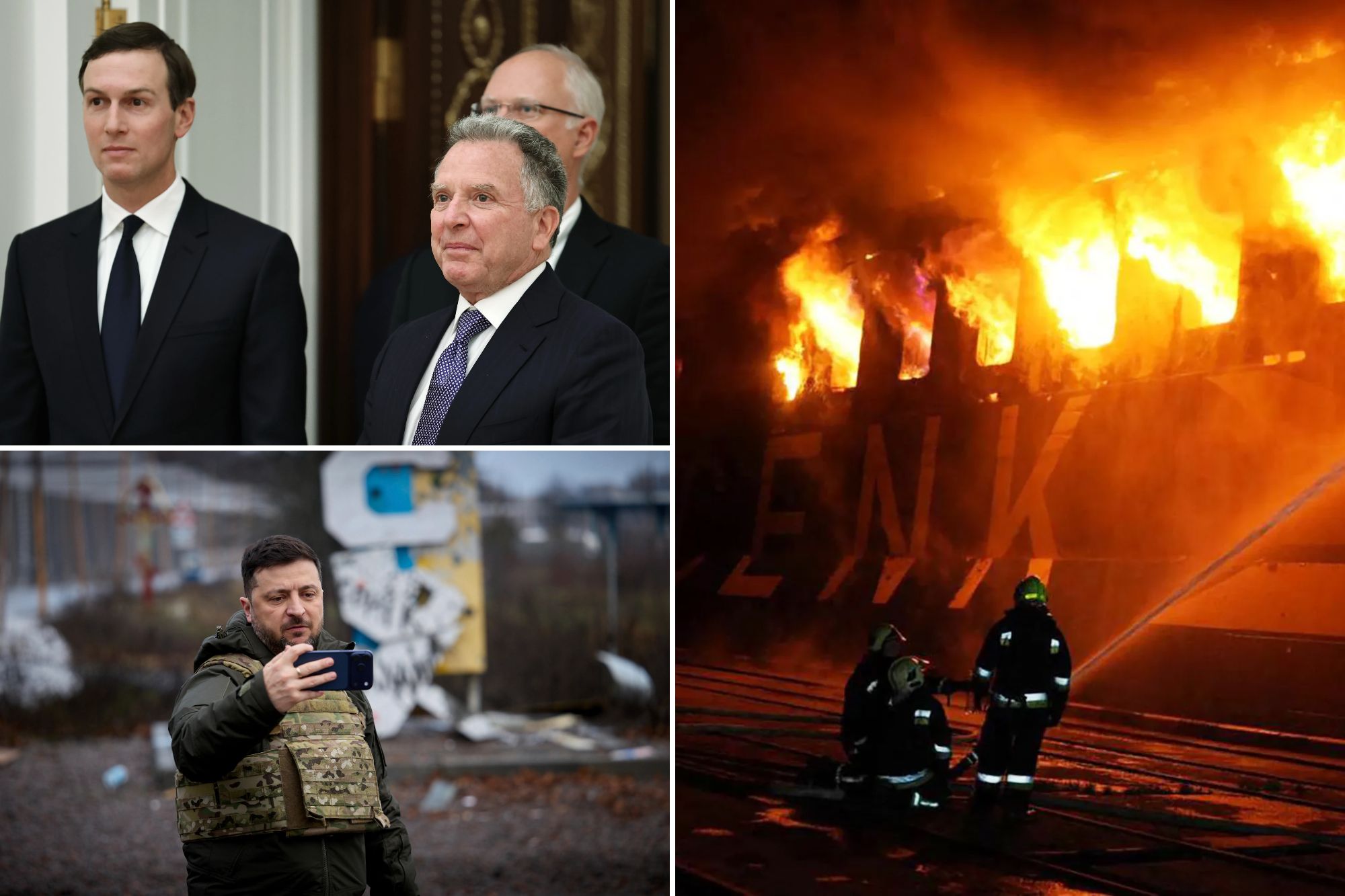
U.S. officials, including Jared Kushner and special envoy Steve Witkoff, arrived in Berlin on December 25, 2023, for crucial discussions with Ukrainian President Volodymyr Zelensky and European leaders. This meeting aims to advance a peace deal intended to end the ongoing conflict in Ukraine, which has resulted in significant loss of life and resources.
The White House indicated that the decision to attend the meetings was contingent on the progress achieved in prior discussions, suggesting that these talks could represent a pivotal step toward a potential truce. Earlier scheduled negotiations between the United Kingdom, France, Germany, and Ukraine in Paris were unexpectedly canceled, leaving many observers questioning the state of diplomatic efforts.
Key Issues and Proposals on the Table
Discussions are expected to focus on revisions to a proposed peace plan from Washington that was recently leaked and deemed unfavorable by Ukrainian and European leaders. This draft reportedly included provisions for Ukraine to cede territory, abandon its NATO aspirations, and restrict its military capabilities. Territorial concessions remain a contentious issue, particularly in relation to the mineral-rich Donbas region, which Russian President Vladimir Putin has demanded. Zelensky has categorically rejected any proposals that would require Ukraine to relinquish its land.
During the talks, Zelensky shared that the U.S. has proposed a “compromise vision” which would involve a withdrawal of both Ukrainian and Russian troops from eastern Donetsk, an area where Moscow currently controls about 80% of the territory. He noted the complexity of establishing a “free economic zone,” as referred to by the Americans, or a “demilitarized zone,” as termed by the Russians. Zelensky raised concerns regarding the management and enforcement of such zones, particularly in ensuring that Russian forces would indeed withdraw.
Security Guarantees and Ongoing Violence
Ukraine’s position remains firm that any decisions regarding territorial adjustments must be determined by its citizens, potentially through elections or referenda. The U.S. is exploring the possibility of providing security guarantees similar to NATO’s Article 5, which would reassure Ukraine against future Russian aggression without formal NATO membership.
Notably, President Trump expressed the U.S.’s willingness to offer security assurances for Ukraine, suggesting this could be a decisive factor in achieving a peace agreement. Meanwhile, violence continues to escalate in the region. Reports indicate that at least two Russians were killed following a Ukrainian strike on a Russian oil refinery in the Saratov region, which has been targeted multiple times in recent weeks.
In Ukraine, the situation remains dire; three individuals were killed in the Donetsk region, and approximately 400 residents were evacuated from frontline areas due to ongoing hostilities. The conflict has intensified, with Russian forces launching around 450 drone attacks and 30 missile strikes, leading to power outages in parts of Kyiv and leaving over a million people without electricity.
Zelensky criticized the Russian government’s actions, asserting that their continued assaults reflect an intention to inflict maximum pain on the Ukrainian population rather than a genuine desire to end the war. He emphasized that sustained pressure must be applied to Russia to compel a cessation of hostilities.
As the diplomatic dialogue unfolds, the international community watches closely, hopeful that these discussions may lead to a breakthrough in a conflict that has shaped global geopolitical dynamics.