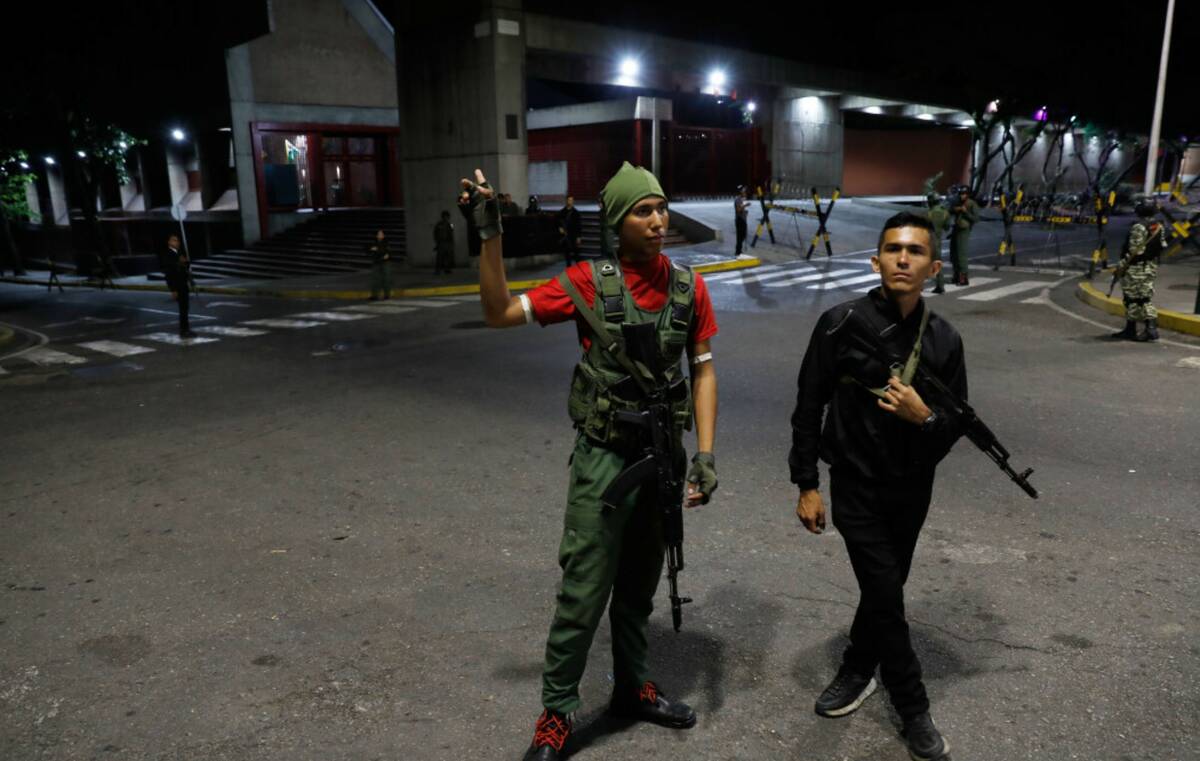
At approximately 02:00 local time on Saturday, March 9, 2024, the Venezuelan capital of Caracas experienced a series of explosions and reports of low-flying aircraft. The Venezuelan government has accused the United States of launching attacks on civilian and military installations across multiple states. In response to these events, the Pentagon referred inquiries to the White House, which did not immediately provide a comment.
The Federal Aviation Authority has implemented a ban on U.S. commercial flights within Venezuelan airspace, citing “ongoing military activity.” The explosions in Caracas resulted in visible smoke rising from a military base hangar, while another installation in the capital was reported to be without power. Eyewitness accounts from local residents describe the chaos, with one 21-year-old office worker, Carmen Hidalgo, stating, “The whole ground shook. This is horrible. We heard explosions and planes.”
In an official statement, the Venezuelan government called upon its supporters to mobilize against what it termed an “imperialist attack.” The government urged “all social and political forces in the country to activate mobilization plans.” Additionally, President Nicolás Maduro has ordered the implementation of national defense plans and declared a “state of external disturbance.”
Recent actions by the U.S. military, targeting alleged drug-smuggling boats, have intensified tensions. On Friday, March 8, Venezuela expressed willingness to negotiate an agreement with the U.S. to combat drug trafficking. Maduro has claimed that the U.S. aims to orchestrate a government change in Venezuela to gain access to its vast oil reserves, a narrative that has gained traction amid ongoing military presence in the Caribbean.
The U.S. has accused Maduro of narco-terrorism, and last week, the CIA reportedly conducted a drone strike on a docking area linked to Venezuelan drug cartels—the first known U.S. direct operation on Venezuelan soil since military strikes began targeting boats in September. President Donald Trump has previously suggested the possibility of ordering strikes on Venezuelan territory, intensifying concerns over U.S. military intervention.
Since early September, the U.S. military has engaged in operations against boats in the Caribbean Sea and eastern Pacific Ocean, with 35 strikes reported as of March 8. These actions have resulted in at least 115 fatalities, according to the Trump administration. The military buildup in the region, which includes the deployment of advanced aircraft carriers, has marked a significant increase in U.S. forces in South America, aimed at disrupting drug trafficking.
Trump has characterized these military strikes as necessary to curb the flow of drugs into the U.S., emphasizing that the country is involved in an “armed conflict” with drug cartels. The current situation highlights a complex interplay of military, political, and economic factors that continue to shape relations between Venezuela and the United States. As tensions escalate, the international community watches closely for developments that could have far-reaching implications.