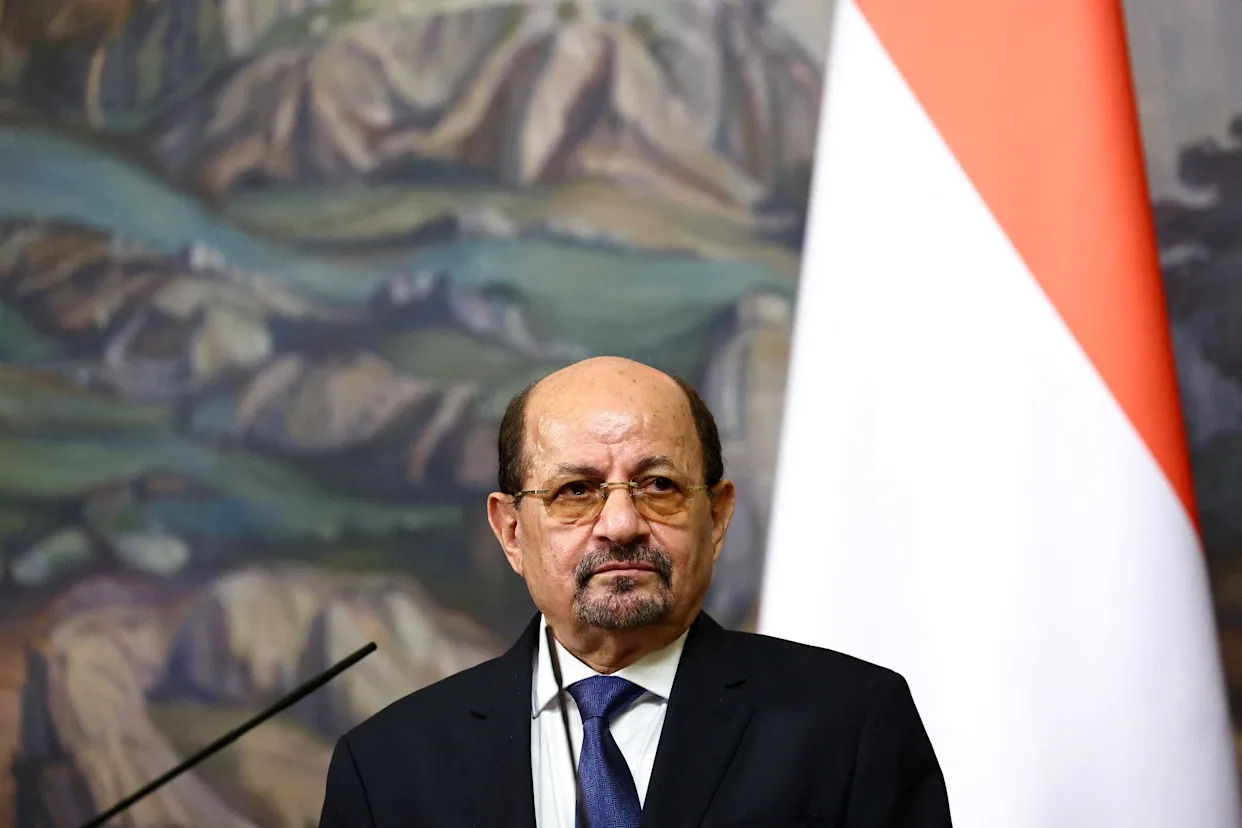
Yemen’s government has appointed a new prime minister following the resignation of Salem bin Breik. The Saudi-backed presidential leadership council accepted his resignation and named Shaya Mohsin al-Zindani, the country’s foreign minister, as the new prime minister. This change was reported by the state news agency Saba on Thursday, marking a significant shift in Yemen’s political landscape.
The resignation comes at a time of heightened tensions between Saudi Arabia and the United Arab Emirates (UAE), particularly concerning control over southern Yemen. The Southern Transitional Council (STC), a major separatist group in the region, has gained considerable power, seizing control of several areas in southern and eastern Yemen since December. Their advance has raised security concerns for Saudi Arabia, which views the situation as a direct threat to its national security.
In a further consolidation of power, the presidential leadership council dismissed Faraj Salmeen Al-Bahsani, a vice president of the STC, who has been receiving treatment in the UAE. The council’s decision was announced alongside the appointment of two pro-Saudi figures to key positions, amidst ongoing geopolitical complexities in the region. Al-Bahsani was previously the governor of the oil-rich Hadramout province, which has been a focal point of conflict.
The council’s official resolution cited multiple reasons for Al-Bahsani’s dismissal, including his support for Aidarous al-Zubaidi, the STC leader who recently fled to the UAE after being accused of “high treason.” Tensions have escalated as Al-Bahsani publicly stated that southern forces, including separatists, would not agree to unite under a Saudi-led coalition, as proposed by the council chairman. He urged for negotiations to be held outside of Saudi Arabia to avoid undue pressure on participants.
Earlier this week, a separatist delegation announced it had dissolved its group while in Riyadh for talks, claiming the decision was made under duress. The STC accused Saudi Arabia of detaining the delegation, further complicating the already delicate situation.
In an effort to stabilize the region, Saudi Arabia has pledged significant financial support to Yemen. On Thursday, the kingdom announced a donation of $90 million to cover two months’ worth of salaries for public servants and servicemen. This follows a prior commitment of $500 million for humanitarian projects aimed at alleviating the ongoing crisis in Yemen, which has been described as one of the world’s worst humanitarian emergencies.
As Yemen navigates this political upheaval, the implications for the region and its people remain significant. The appointment of Zindani as prime minister could signal a new chapter in Yemen’s governance, yet the underlying tensions between various factions continue to pose challenges. The international community watches closely as Saudi Arabia and the UAE work to maintain their influence in a nation that has been embroiled in conflict for years.