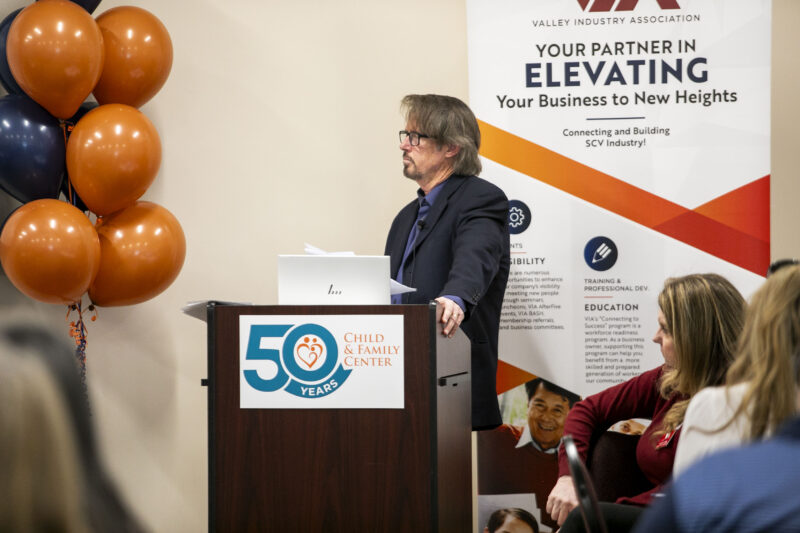
The Valley Industry Association (VIA) convened a panel on February 24, 2026, to address pressing issues in the real estate market, including rising insurance costs and the decline in home ownership. The event, titled “Real Estate, Rates and the Workforce,” took place at the Child & Family Center’s Education Center and featured insights from industry experts including Ed Masterson, Bri King from Prime Real Estate, Fred Arnold of American Family Funding, and Pamela Verner, president of SCV Commercial Real Estate Services.
Ed Masterson opened the discussion by highlighting the evolving economic landscape of the Santa Clarita Valley. He stated, “Today, we’re talking about three forces that are deeply connected: commercial real estate, residential real estate, and mortgage rates. Also, part of the conversation will be how the workforce is affected by those three components.”
Current State of the Real Estate Market
Panelists provided their perspectives on the current state of the Santa Clarita real estate market compared to pre-pandemic conditions. Bri King noted that the market is transitioning back to a more normalized state after several years of volatility driven by COVID-19, interest rates, and supply chain issues. “We are grading back into a normalized market. Seasonally speaking, we’re sitting at 536 houses on the market; during COVID, we didn’t see over 400,” King explained. She anticipates that the rest of 2026 will reflect a neutral market, despite indications of a buyer’s market depending on pricing strategies.
Pamela Verner addressed the commercial real estate sector, noting significant price increases since before the pandemic. “Before 2019, I had a listing under $1 per square foot. Today, we’re at $1.55 per square foot,” she stated. Verner mentioned that while prices for industrial properties have surged, the office market is facing challenges due to shifts in remote work. “Retail has been pretty stable,” she added.
Fred Arnold contributed to the conversation by discussing the disconnect in the market, particularly regarding financing. He remarked, “My realization is money is not flowing. The banks aren’t lending money on commercial real estate. I think there’s going to be a huge opportunity to buy either office or live industrial because none of it’s selling, none of it is moving.” Arnold also highlighted demographic factors, noting that in Los Angeles County, there are approximately 1.5 million individuals aged 27 to 34 who have yet to purchase a home, which may contribute to a stagnation in the market.
Impact of Mortgage Rates and Insurance Costs
The discussion shifted to the implications of mortgage rate locks, particularly in the residential sector. Verner pointed out that while rate locks are more relevant to homebuyers, they do not play a significant role in commercial real estate. She shared her own experience, stating, “I’m locked in at 3% and I’m never moving.”
Bri King emphasized the importance of generational wealth and the concept of “forever homes.” She said, “Rate lock is a real syndrome, but I’m starting to see a break. If you look at statistics across the United States, 40% of homes are owned free and clear.” King believes that many families are waiting for equity transfers to invest in multi-generational living arrangements.
Arnold raised concerns about the increasing costs of insurance, particularly for residential and commercial loans. He described the high expenses associated with obtaining insurance, especially for condominiums, as a significant hurdle for potential buyers. “The cost of insurance is really high. Down payment is the biggest roadblock that we’re running into on a $700,000 house,” he explained. Arnold noted that many prospective buyers are burdened by student loans, complicating their ability to secure financing.
The VIA’s luncheon provided a platform for critical discussions on the interconnectedness of real estate, mortgage rates, and workforce dynamics in the Santa Clarita Valley. As the region continues to navigate these challenges, insights from industry experts will be crucial in shaping the future landscape of real estate.