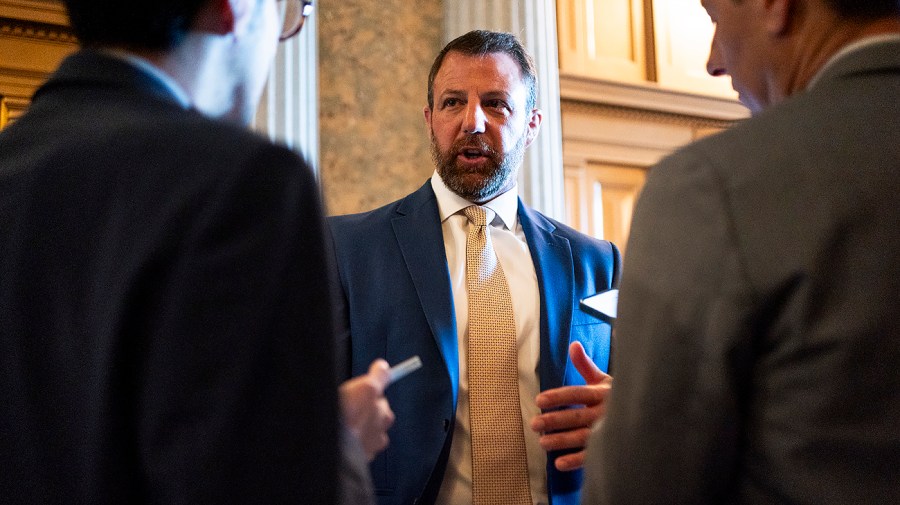
President Donald Trump announced on social media on January 4, 2024, that Senator Markwayne Mullin of Oklahoma will succeed Kristi Noem as the Secretary of the U.S. Department of Homeland Security. This appointment marks a significant shift in the leadership of a department that plays a crucial role in national security.
Mullin, a member of the Republican Party, has served as a senator since 2022. His background in business and previous experience in Congress are expected to inform his approach to managing the department, particularly in areas related to border security and immigration policy.
In his announcement, Trump emphasized Mullin’s commitment to enhancing security measures and expanding the department’s role in protecting the United States. He stated, “Markwayne is a proven leader who understands the challenges we face at our borders.”
As Secretary, Mullin will take over at a time when the Department of Homeland Security is navigating complex issues, including immigration reform and cybersecurity threats. His predecessor, Noem, has been noted for her controversial policies regarding border security during her tenure.
This change in leadership has sparked discussions among political analysts. Some view Mullin’s appointment as a move to reinforce Trump’s administration’s hardline stance on immigration and national security. Others argue that it could signal a shift towards a more business-oriented approach to governance within the department.
Mullin’s confirmation will require approval from the Senate, where his fellow Republicans hold a slim majority. His experience in the Senate and connections within the party may facilitate a smoother confirmation process.
As the new Secretary of Homeland Security, Mullin will be tasked with addressing pressing challenges, including the ongoing debates surrounding immigration policy and domestic terrorism. His strategies and decisions will be closely monitored as they could have lasting impacts on national security.
The transition from Noem to Mullin reflects broader political dynamics as the Trump administration continues to shape its agenda leading into the next election cycle. With the complexities of security and immigration at the forefront, Mullin’s tenure could prove to be both pivotal and controversial.
In the coming weeks, as he prepares for his new role, it remains to be seen how Mullin will prioritize these issues and what measures he will advocate for to ensure the safety and security of the nation.