Research presented by Ali May, an assistant professor at the Icahn School of Medicine at Mount Sinai, has unveiled significant insights into the role of tissue resident macrophages in embryonic salivary gland development. During her seminar on February 19, 2026, May challenged traditional views of macrophages, typically seen as mere “garbage collectors,” by highlighting their potential to guide organ development.
May’s work focuses on how macrophages interact with epithelial cells and surrounding tissues during the critical phases of gland formation. “I hope you go home today knowing that macrophages are absolutely essential,” she emphasized, aiming to shift the perception of these cells from passive to active participants in development.
The research draws on May’s extensive background, including her postdoctoral studies on neurons, where she first recognized the intersection of immune and nervous system functions during development. By employing techniques such as live imaging, genetic depletion, and organ culture, her lab investigates the influence of various macrophage populations on branching morphogenesis—the process through which glands develop complex structures.
Macrophages and Gland Structure
A key methodology utilized by May’s team involves an inducible genetic system that allows for the targeted elimination of macrophages during specific developmental windows. Findings indicated that depleting macrophages resulted in less branching within developing salivary glands. “When you have less branching, you’re going to have much larger buds and fewer of them,” May explained. Observations showed that a lack of macrophages led to abnormal structures known as ‘Terminal Buds,’ which signal impaired branching morphogenesis.
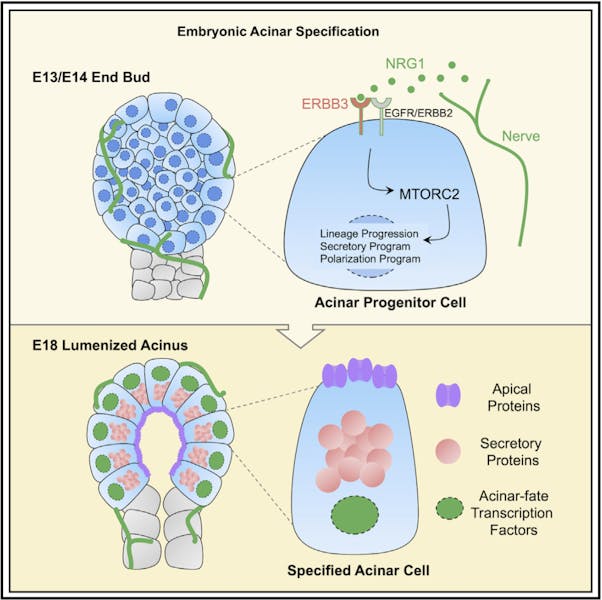
Subsequent gene expression analyses revealed that tissues missing macrophages exhibited reduced expression of important genes linked to secretory acinar cell differentiation. “Not only are we reducing branching,” May noted, “but we’re hindering differentiation of these essential cells.”
The implications of these findings extend beyond the epithelial cells of the salivary glands. May’s research indicates that macrophages also affect non-epithelial cell types, including those related to glial and neural markers. This suggests that macrophages may play a role in the developmental dynamics of the nervous system within the gland, supporting the hypothesis that they assist in pruning neurons in other organs.
Signaling Pathways and Developmental Impacts
Transitioning into the topic of cellular signaling, May elaborated on her focus as a developmental biologist in understanding ligand-receptor interactions. Her lab analyzed single-cell RNA sequencing data to identify candidate communication pathways, leading to the discovery of the cytokine tumor necrosis factor (TNF) expressed in macrophages.
“Initially, I suspected that the enzymatic digestion for single-cell prep might have artificially activated the cells,” May said. Despite this, direct tissue staining confirmed TNF expression near the epithelial compartment. The research team noted an upregulation of TNF receptors in epithelial cells over time, raising questions about TNF’s role as a developmental regulator rather than merely an inflammatory marker.
To further investigate TNF’s impact, May’s team established an in-vitro culture system that isolated the epithelial component of embryonic salivary glands. These isolated tissues were cultured without nerves, blood vessels, or macrophages, allowing for a focused examination of epithelial growth. In samples treated with TNF, the glands exhibited pronounced branching and increased growth. “We see a significant increase in both the branching and the growth of these glands,” May stated.
Concluding her presentation, May introduced her findings regarding the dual origins of macrophages in salivary glands. These include a long-lived yolk-sac derived population and a later-arriving monocyte-derived population, each occupying distinct niches and serving different functions throughout development.
Demonstrating live imaging of macrophages, May described their behavior as “cuddling” the epithelial cells, suggesting a dynamic relationship that may influence cell division. One of the key questions emerging from this observation is whether macrophages are simply monitoring dividing cells or actively stimulating their proliferation.
As May’s research progresses, it continues to challenge the traditional role of macrophages, revealing them as integral contributors to organ development rather than passive entities. This work not only advances our understanding of salivary gland biology but also opens avenues for exploring macrophage functions across various organ systems.