Scientists are delving into the unique microbial ecosystems of Lake Fryxell, situated in the McMurdo Dry Valley of Antarctica. In late 2025, a team of researchers led by Elisa Merz, a biogeochemist from the University of Konstanz, conducted fieldwork from a research camp dedicated to uncovering the secrets of this remote lake. The lake is enveloped in ice year-round, with a thickness ranging from four to five metres, creating an environment ripe for scientific study.
The team, equipped for extreme conditions, faced a daunting climate with air temperatures plunging to minus 20 degrees Celsius. Each day began with a briefing in the only heated hut before they ventured out to the dive hole. The lake presents a fascinating dynamic; its waters are oxygen-rich only to depths of around ten metres, beyond which lies an anoxic environment. These conditions are typically found in much deeper waters, making Lake Fryxell an intriguing site for researchers.
“Lake Fryxell is unique,” Merz notes, “because it lacks macrozoobenthic organisms such as fish and large algae, focusing instead on a plethora of microorganisms.” This characteristic transforms the lake into a research haven. The complete ice cover prevents wind interaction and water currents, leading to a stable environment where microbial mats can flourish. These mats, layered like lasagne, offer a clear view of the microbial communities at the lake’s bottom.
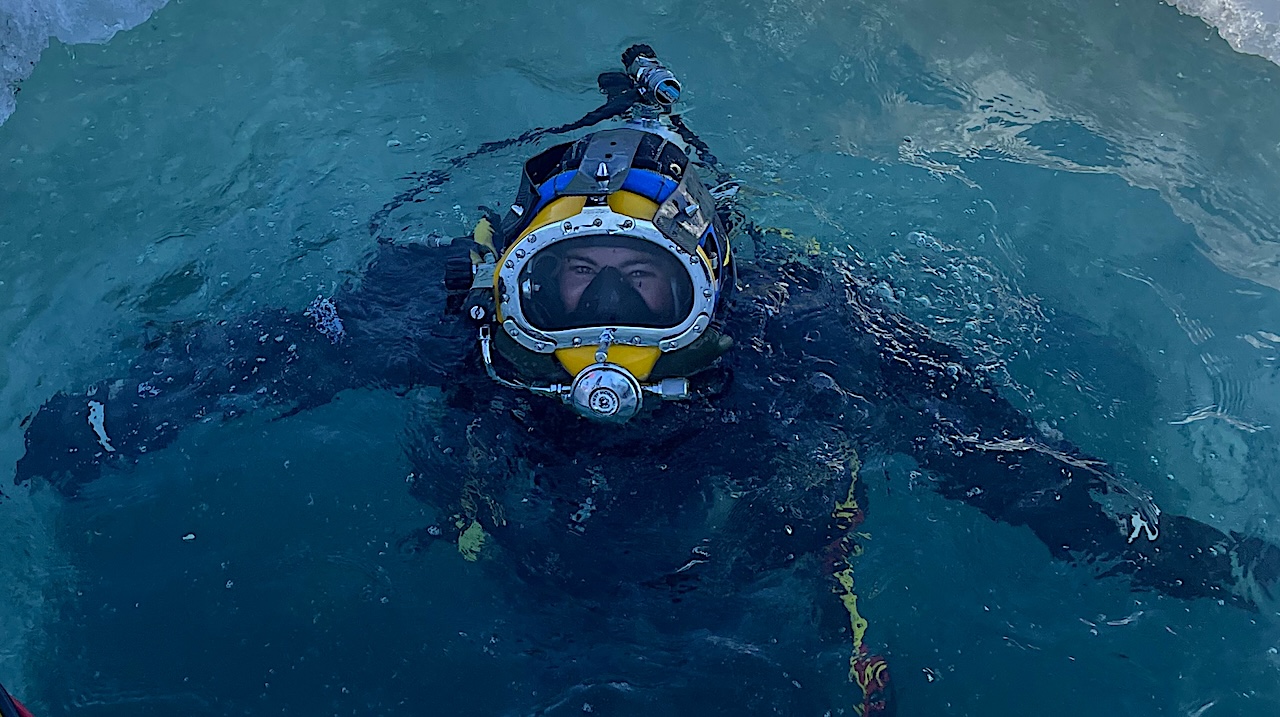
Diving in such frigid conditions poses its challenges. Although the external temperature is harsh, the water remains relatively warmer at around four degrees Celsius. Merz highlights the critical role of the person managing the diving umbilical, which supplies air and communication to the divers below. “It’s a tough job,” she explains, “especially standing outside in the wind. We rotate, but 45 minutes is really the maximum we can handle.”
The field camp at Lake Fryxell offers a glimpse into life at McMurdo Station, the largest research facility in Antarctica. Research conditions vary significantly between the two locations, with McMurdo providing a more stable environment compared to the extreme conditions faced at Lake Fryxell.
Merz’s research focuses on understanding the microbial life thriving under the ice, which could provide insights into similar ecosystems on other planets. The findings from Lake Fryxell contribute to our understanding of extremophiles—organisms that thrive in extreme environments—and their potential role in astrobiology.
For those interested in the intricacies of life in one of the world’s most inhospitable regions, further details can be found in the in-depth report titled “In her element” published by the University of Konstanz. This research not only sheds light on microbial life but also exemplifies human resilience and curiosity in the face of nature’s challenges.