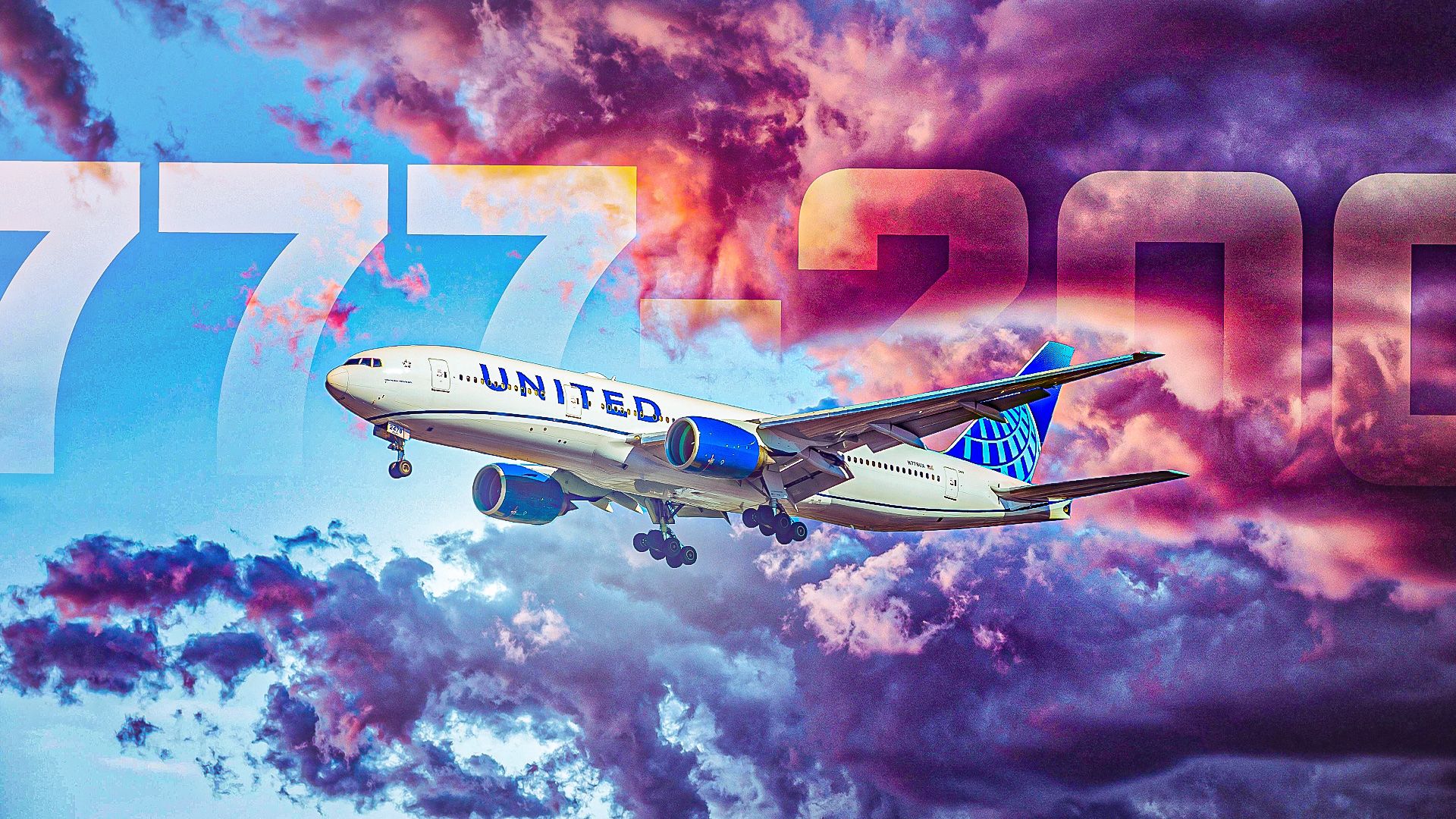
United Airlines proudly holds the title of the largest and only operator of the Boeing 777-200 in the United States. The airline was the launch customer for this widebody aircraft, which debuted in 1995. Currently, United operates 18 of the remaining 22 standard 777-200s in regular service, focusing on domestic routes across the country. Other operators of this variant include Japan’s All Nippon Airways and Nigeria’s MaxAir, while the Gabonese Air Force is the sole military operator.
Key Features of the Boeing 777-200
The Boeing 777-200, launched in 1990, is renowned for its capacity and efficiency. This aircraft can accommodate up to ten seats per row in economy class, typically configured in three classes, seating between 301 and 368 passengers. Its range extends from 6,030 to 9,840 miles (9,700 to 15,840 kilometers), making it well-suited for medium and long-haul flights. The aircraft features large diameter turbofans, raked wingtips, and a six-wheel main landing gear.
Notably, the 777 was Boeing’s first aircraft to incorporate fly-by-wire controls and carbon composite structures in its tailplanes. With an initial length of 209 feet (63.73 meters), the 777-200 paved the way for subsequent variants, including the 777-300 and the extended range versions, 777-200ER and 777-300ER.
Onboard Experience and Fleet Details
United’s configuration of the 777-200 allows for a maximum capacity of 364 passengers across three classes: 28 United First, 102 Economy Plus, and 234 United Economy seats. The airline offers onboard WiFi, USB ports, power outlets, and seatback entertainment. Passengers in United First enjoy a spacious 2-4-2 layout with a seat pitch of 6 feet, 4 inches (193 centimeters), while Economy Plus and United Economy seating features a 3-4-3 layout, with pitch ranging from 31 inches (78.7 cm) to 34 inches (86.4 cm).
The 777-200 is powered by either General Electric GE90 or Pratt & Whitney PW4070/4090 engines, producing up to 94,000 pounds of thrust and achieving cruise speeds of 550 mph. As of March 2026, United Airlines remains one of the largest commercial airlines by fleet size, with an average aircraft age of 17.1 years, while the 777-200s range from 25.5 to 31.6 years old.
United’s fleet includes some of the oldest 777-200s currently in operation, with the oldest aircraft, N774UA, being 31.62 years old. In comparison, All Nippon Airways operates two 777-200s, aged approximately 20.9 and 20.7 years, while MaxAir’s single aircraft is nearly 19 years old.
While the Boeing 777-200 has served United well over the years, the airline is preparing for a transition to the newer Boeing 787-10 Dreamliner. With an order of around 150 Dreamliners, United aims to replace its aging fleet with more fuel-efficient aircraft, designed to lower operating costs and emissions while enhancing the passenger experience.
As United Airlines phases out the 777-200, it is also looking to retire other older aircraft, including the 767-300ER and 767-400, which will be replaced by the 787-9. On the narrowbody side, older Airbus A319-100 and A320-200 jets are set to exit the fleet, alongside a gradual replacement of the 757-200 with the Airbus A321XLR.
United’s 777-200s continue to serve key domestic routes, with significant traffic observed on flights from Los Angeles to Honolulu and other destinations like Denver, Houston, and San Francisco. The airline’s commitment to modernizing its fleet positions it for continued growth in the competitive aviation market, leveraging the capabilities of the 787-10 to explore new and niche international routes.
This strategic shift not only aligns with United’s operational needs but also enhances its reputation as a leading international carrier, setting the stage for future developments in air travel.