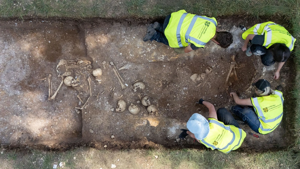
A recent discovery in Uppsala, Sweden, has provided significant insight into ancient medical practices, particularly the earliest known examples of brain surgery. Archaeologists uncovered a Viking-era skull bearing a large hole, indicating that the individual may have undergone a procedure known as trepanation. This surgical intervention, believed to have been performed approximately 1,000 years ago, was likely aimed at alleviating symptoms related to severe migraines or seizures.
The findings were detailed in a study conducted by researchers from the University of California, Berkeley, and the Archaeological Institute of America. The analysis of the skull revealed not only the size but also the precision of the opening made, suggesting that ancient practitioners had a rudimentary understanding of the human brain and its functions.
Understanding Trepanation and Its Historical Context
Trepanation, a procedure that involves drilling or scraping a hole into the skull, is one of the oldest surgical practices known to humanity. Evidence of this technique has been found across various cultures and regions, indicating its widespread use in ancient medicine. Historians suggest that trepanation was performed for various reasons, including treating head injuries, relieving pressure from swelling, or addressing neurological disorders.
In this specific case, the large hole in the Viking skull supports the theory that ancient societies were not only aware of but also actively engaged in medical practices that addressed complex health issues. The decision to perform such an invasive procedure reflects a significant level of sophistication and knowledge of anatomy for the time.
Implications for Modern Medicine
The implications of this discovery extend beyond historical curiosity. Understanding how ancient cultures approached medical challenges can provide valuable lessons for modern medicine. It highlights the continuity of human endeavors to alleviate suffering and improve health, regardless of the time period or technological advancements available.
Moreover, the findings encourage a reevaluation of early medical practices. While contemporary medicine relies heavily on advanced technology, the fundamental goal remains the same: to understand and treat human ailments. This ancient skull serves as a poignant reminder of the enduring quest for knowledge and healing throughout human history.
As further research unfolds, experts anticipate that additional insights will emerge, shedding light on the medical practices of the past and their influence on present-day healthcare. The Viking skull not only enriches our understanding of ancient surgical techniques but also underscores the resilience and ingenuity of those who lived a millennium ago.